
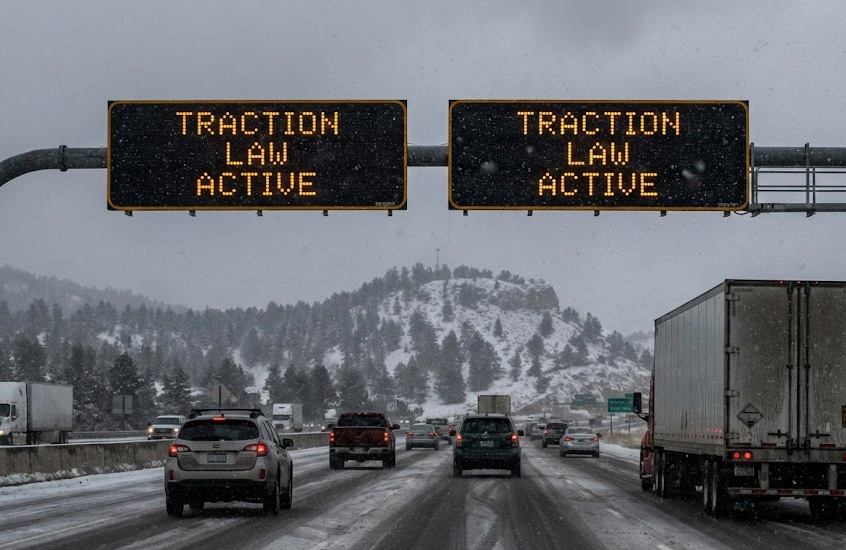
You’re driving north on I-25 toward Denver when you see those overhead signs flash: “Traction Law Active.” Your stomach drops. Is your Nissan Rogue or Pathfinder actually legal to keep driving? You’ve got all-wheel drive, but is that enough? What about those tires that came with your brand-new vehicle—are they really winter-ready, or are you risking a fine right now? If you’ve ever felt that uncertainty climbing Monument Hill or navigating “The Gap” between Colorado Springs and Castle Rock during a snowstorm, you’re not alone. Colorado’s Code 15 Traction Law causes genuine confusion for thousands of drivers every winter, especially locals who commute I-25 daily. The truth is more nuanced, and knowing the real requirements can save you money, time, and serious hassle.
What Is “Code 15” and Why Is It Flashing on I-25?
Code 15, officially called the Passenger Vehicle Traction Law, is Colorado’s legal requirement that kicks in when road conditions become dangerously slick due to snow, ice, or reduced visibility. When you see “Traction Law Active” on digital highway signs along I-25—especially near Monument Hill—it means every vehicle must meet specific tire and traction requirements. The law applies to all state highways, including the entire I-25 corridor from Colorado Springs through Denver. While the mandatory traction law is always in effect on I-70 during winter, on I-25 it is actively enforced whenever conditions warrant it between September 1 and May 31 each year. Code 15 doesn’t just apply to mountain highways like I-70—it’s implemented right here on I-25 whenever conditions warrant it.
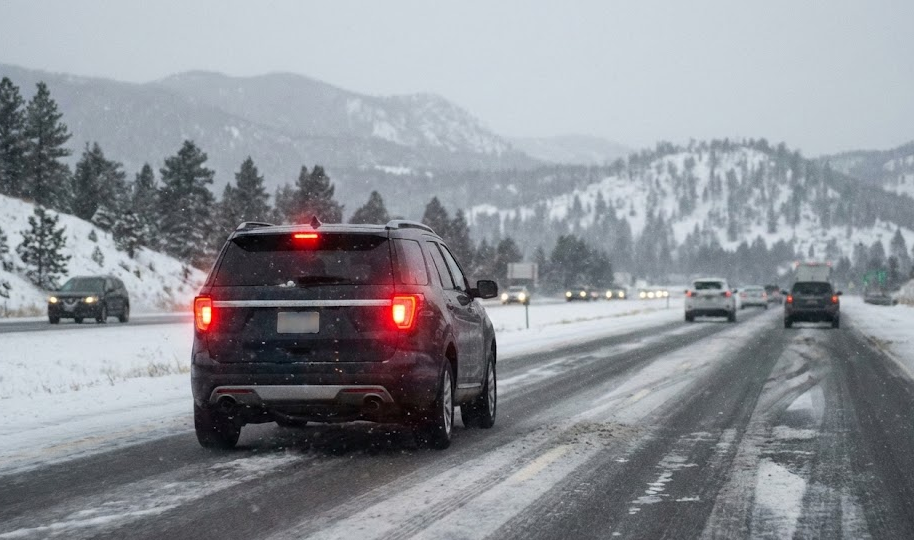
So what does Code 15 require? You must have winter tires with the mountain-snowflake symbol, all-season tires with an M+S (Mud+Snow) rating, or an AWD/4WD vehicle equipped with adequate tires. Critically, all tires must maintain at least 3/16-inch tread depth. If your vehicle doesn’t meet these standards, you’re required to install tire chains or an approved alternative traction device to legally proceed. The penalties aren’t trivial—violating Code 15 can result in fines, and if your inadequate tires cause you to block traffic, you’re looking at substantially higher penalties. That’s preventable with a quick tire inspection at your Nissan-certified service team.
The “All-Season” Myth: Why M+S Ratings Might Fail You
Here’s where many Colorado Springs Nissan owners get tripped up: they believe “all-season” tires are genuinely designed for all seasons, including Colorado’s harsh winters. That’s a common misconception that can leave you stranded on I-25 or worse—sliding into another vehicle on an icy morning commute. The reality is that most all-season tires, even those proudly displaying an M+S designation on the sidewall, are engineered primarily for three-season performance. When temperatures consistently drop below 45°F, the rubber compound in standard all-season tires becomes noticeably stiffer and loses crucial flexibility. This stiffening dramatically reduces traction on snow and ice, turning what should be a reliable tire into something locals jokingly compare to “hockey pucks” sliding across a rink.
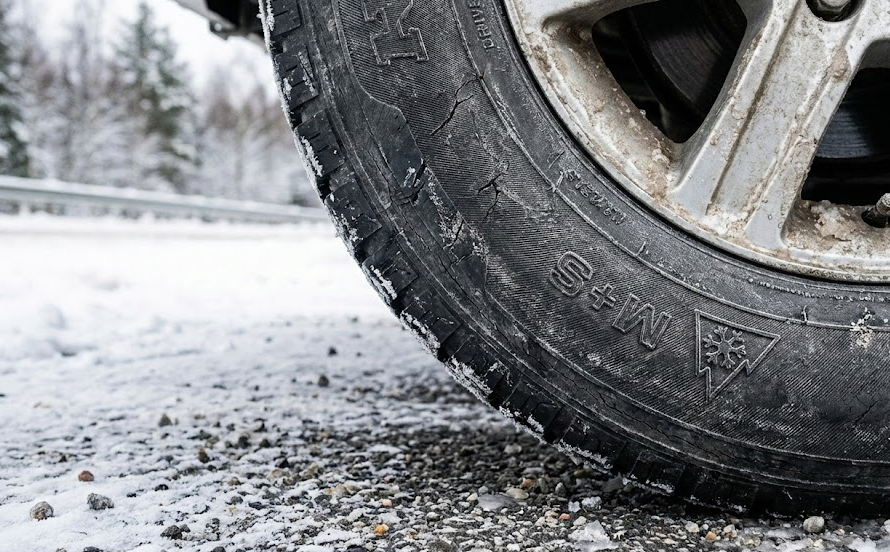
M+S stands for “Mud and Snow,” and it indicates that a tire meets certain industry standards for tread pattern and design. However—and this is the crucial part—the M+S rating says absolutely nothing about the tire’s rubber composition or how it performs in truly cold temperatures. A tire can earn the M+S badge simply by meeting geometric tread requirements, even if its rubber compound turns rock-hard the moment temperatures dip into freezing territory. This is why experienced Colorado drivers who regularly face Monument Hill’s unpredictable conditions strongly prefer winter tires marked with the mountain-snowflake symbol, officially called the Three-Peak Mountain Snowflake (3PMSF) certification.
Winter Tires vs. All-Seasons: The Stopping Distance Reality
Numbers don’t lie, and the stopping distance data from independent winter tire testing tells a sobering story about tire performance in winter conditions. At 60 mph on snowy pavement—a speed you’d commonly be traveling on I-25 between Colorado Springs and Denver—a vehicle equipped with proper winter tires requires approximately 310 feet to come to a complete stop. That’s already more than the length of a football field. Now here’s the alarming part: that same vehicle, traveling the same speed on the same snowy surface, but fitted with standard all-season tires instead, needs more than 668 feet to stop. That’s over twice the distance, meaning you need more than double the reaction time and space to avoid a collision when brakes are applied suddenly.
Think about your typical morning drive north toward Denver or Castle Rock. Traffic is moving steadily despite some snow on the roadway. Then, suddenly, brake lights flash ahead as someone encounters black ice. Those extra 350+ feet of stopping distance that all-season tires require could mean the difference between a safe stop and a multi-vehicle pileup.
Does Your New Nissan Rogue or Pathfinder Need Winter Tires?
This question keeps coming up at service centers throughout Colorado Springs, and the answer surprises many new Nissan owners: yes, even your brand-new vehicle with factory tires probably needs winter tire consideration. When you drive your gleaming new Nissan Rogue or Pathfinder off the lot, it comes equipped with manufacturer-selected all-season tires that are perfectly adequate for most American driving scenarios. However, they’re specifically not optimized for Colorado’s unique winter challenges. Your new Nissan’s AWD system is genuinely impressive technology, but here’s the critical limitation: AWD helps you accelerate and maintain momentum in slippery conditions, yet it does absolutely nothing to help you stop or steer more effectively on ice and snow.
AWD gives you confidence getting moving from a stoplight when roads are slick, but when you need to brake suddenly or swerve around an obstacle, your tires are doing 100% of that work. Additionally, those brand-new factory tires start losing tread immediately with regular use. After just a few months of typical Colorado Springs driving—navigating Academy Boulevard traffic and daily commutes—your tread depth can easily drop close to that critical 3/16-inch minimum. Check your current tire rebates and specials before winter weather arrives.
The 3/16-Inch Rule: The Hidden Detail That Leads to Fines
Here’s the specification that trips up more drivers than any other aspect of Colorado’s Traction Law: that 3/16-inch minimum tread depth requirement. Most motorists understand they need “decent” tread, but few realize that Colorado’s winter standard is significantly stricter than the general legal minimum. The typical legal minimum across most states is just 2/32-inch, while Colorado’s Code 15 requirement of 3/16-inch (which equals 6/32-inch) is three times that amount. You could have tires perfectly legal for everyday driving but completely illegal the moment a Traction Law activates on I-25.

How do you check compliance? The old “penny test” checks for 2/32-inch, which is insufficient for Code 15. Instead, take a quarter and insert it into your tire’s tread groove with Washington’s head pointing down. If you see the top of Washington’s head, your tires are likely dangerously close to the limit. For accurate measurement, visit your conveniently located off South Academy Blvd Nissan service center, where technicians use precise tread depth gauges that instantly tell you where you stand.
How Monument Hill Creates Perfect Code 15 Conditions
If you’re a regular I-25 commuter in the Colorado Springs area, you already know Monument Hill by reputation. Located just north of the town of Monument along I-25, it sits at over 7,300 feet elevation and creates a natural weather bottleneck where conditions can shift dramatically within mere minutes. Drivers heading north from Colorado Springs often enjoy clear roads and reasonable visibility, only to crest Monument Hill and suddenly encounter white-out conditions, black ice, or heavy snow that seemingly appeared from nowhere.
According to the National Weather Service office serving Pueblo and Colorado Springs, the Palmer Divide area experiences significantly more winter precipitation and lower temperatures compared to Colorado Springs proper. You might leave your driveway on Academy Boulevard under partly cloudy skies, only to hit Monument Hill 20 minutes later and discover you’ve driven straight into a full-blown winter storm. This is precisely when those electronic highway signs activate Code 15.
Common Code 15 Myths That Could Cost You
Misconceptions about Colorado’s Traction Law run rampant among Front Range drivers. Here are the most common misunderstandings:
- Myth: “AWD means I’m automatically Code 15 compliant.” While AWD is part of the equation, your tires must still meet the M+S rating and 3/16-inch tread depth requirements.
- Myth: “Code 15 is the same as the Chain Law.” Code 15 (Traction Law) requires adequate tires or AWD/4WD. Code 16 (Chain Law) requires chains on every vehicle regardless of drivetrain.
- Myth: “New tires automatically meet Code 15 requirements.” Your new tires need the M+S designation or mountain-snowflake symbol to qualify.
- Myth: “I can visually tell if my tires meet the 3/16-inch requirement.” Only actual measurement with a gauge provides accurate compliance confirmation.
- Myth: “Code 15 only matters on I-70 in the mountains.” Code 15 applies to all Colorado state highways, including I-25 through Colorado Springs and Monument Hill.
Winter Tire Options for Colorado Springs Nissan Owners
| Tire Type | Code 15 Compliant? | Best For | Considerations |
|---|---|---|---|
| Winter Tires (Mountain-Snowflake) | Yes (with 3/16″ tread) | Maximum winter safety, frequent mountain driving | Superior snow/ice performance but requires seasonal changeover |
| All-Weather Tires (M+S + Snowflake) | Yes (with 3/16″ tread) | Year-round convenience, moderate winter conditions | Better than all-seasons in winter but not quite as capable as dedicated winter tires |
| All-Season Tires (M+S Rating) | Yes (with 3/16″ tread) | General driving, minimal winter exposure | Legal but marginal performance in serious winter conditions |
| Summer/Performance Tires | No | Warm weather only | Dangerous in winter conditions; completely non-compliant with Code 15 |
FAQ: Quick Answers for Colorado Drivers
Q: Is my Nissan AWD enough for Code 15 on I-25?
A: AWD alone isn’t sufficient—your tires must also have either an M+S rating or the mountain-snowflake symbol, plus maintain at least 3/16-inch tread depth. Without proper tires meeting these specifications, you’re still in violation when Code 15 is active.
Q: What is the fine for violating the Colorado Traction Law?
A: Fines for Code 15 violations can be substantial. If your inadequate equipment causes you to block traffic or contribute to an accident, penalties escalate considerably. Insurance companies may also consider non-compliance when determining fault in winter weather accidents.
Q: Do I need chains if I have snow tires?
A: Under Code 15 (Traction Law), chains aren’t required if your tires meet the M+S or mountain-snowflake requirements with adequate tread. However, under Code 16 (Passenger Vehicle Chain Law), every vehicle must have chains regardless of tire type—though Code 16 is rare and usually only implemented before highway closure.
Q: How do I know if my tires have the Mountain-Snowflake symbol?
A: Look at your tire’s sidewall for a symbol showing a mountain with three peaks and a snowflake inside it, usually located near the tire size information. If you see just “M+S” but no mountain-snowflake symbol, you have all-season tires rather than dedicated winter tires.
Q: When should I switch to winter tires in Colorado Springs?
A: Most experts recommend making the switch when daytime temperatures consistently stay below 45°F, which typically occurs around late October or early November in Colorado Springs. Code 15 can be implemented as early as September 1, so monitor weather forecasts as fall approaches.
Schedule Your Complimentary Code 15 Tire Inspection Today
Don’t let uncertainty about Code 15 compliance add stress to your daily I-25 commute or weekend Denver trips this winter. The factory-trained technicians at South Colorado Springs Nissan understand exactly what Colorado’s Traction Law requires, and more importantly, they know how to keep your Nissan Rogue, Pathfinder, Altima, or any other model truly safe when Monument Hill inevitably turns treacherous. Whether you’re driving a brand-new vehicle or a trusted Nissan that’s been serving your family for years, tire compliance and winter performance are too critical to leave to guesswork.
With Colorado Springs temperatures regularly dropping into the teens during January and February, waiting until you see that first “Traction Law Active” sign is waiting too long. Proactive tire service now prevents expensive Code 15 violations later and protects your family from dangerous situations that inadequate tires create on snowy Front Range highways. The comprehensive inspection at South Colorado Springs Nissan examines tire age, checks for uneven wear patterns, verifies sidewall ratings, and discusses your driving conditions to ensure you get the right recommendations.
Schedule a complimentary Code 15 tire inspection and drive I-25 with complete confidence this winter!
Or visit us at 1333 S. Academy Blvd., Colorado Springs, CO 80916, and let our certified technicians ensure your Nissan keeps you safe and legal throughout Colorado’s demanding winter weather conditions.